
Hydraulic Maintenance: A Practical Guide to Cutting Downtime
By the ETS engineering team · Dammam, Saudi Arabia
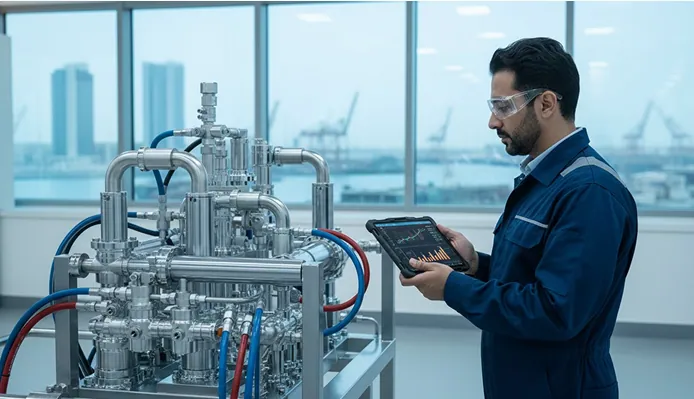
The Strategic Benefits of Regular Hydraulic Maintenance in 2026
Table of Contents
- Key Takeaways
- Table of Contents
- Understanding the True Cost of Hydraulic Neglect
- The 5 Primary Benefits of Regular Hydraulic Maintenance
- Calculating ROI: Why Maintenance is a Profit Center
- Regional Focus: Maintaining Hydraulics in the Saudi Climate
- The ETS Advantage: Partnering for Reliable Performance
- Turn Hydraulic Maintenance Into Your Competitive Advantage
- Frequently Asked Questions
Preventable hydraulic system failures are a major cause of unplanned downtime in industrial operations in Saudi Arabia's Eastern Province. You've likely felt the impact firsthand. An unexpected breakdown leads to frantic calls for emergency parts, soaring costs in Saudi Riyal, and production schedules that spiral out of control, jeopardizing critical client contracts.
This article will shift your perspective from reactive repair to proactive control. We will detail the strategic benefits of regular hydraulic maintenance, showing you exactly how to eliminate these emergency shutdowns, slash repair costs, and significantly extend the lifespan of your critical machinery, even in the Kingdom's demanding climate. We'll break down the financial, operational, and safety advantages that a scheduled maintenance program delivers, providing a clear roadmap to achieving maximum ROI and predictable performance in 2026.
Key Takeaways
- Understand why the visible repair bill is only the tip of the iceberg, and learn to calculate the hidden costs of unplanned downtime in Saudi Riyal (SAR).
- Discover the primary benefits of regular hydraulic maintenance, from extending equipment lifespan beyond its design to optimizing energy efficiency for significant cost savings.
- Implement specific strategies to protect your hydraulic systems from the harsh Saudi climate, combating the damaging effects of extreme heat and dust common in Dammam.
- Learn how proactive maintenance partnerships turn your budget into a profit center, eliminating costly emergency repairs and ensuring reliable operational performance.
Understanding the True Cost of Hydraulic Neglect
In the high-stakes industrial environments of Saudi Arabia, from Dammam's manufacturing hubs to Jubail's petrochemical plants, hydraulic systems are the lifeblood of production. Ignoring their upkeep is not a cost-saving measure; it's a high-interest liability. The true cost of hydraulic neglect is an iceberg. The visible tip is the emergency repair bill, but beneath the surface lies the massive, unseen cost of unplanned downtime, lost production quotas, and compromised safety. One of the primary benefits of regular hydraulic maintenance is transforming this unpredictable liability into a manageable, predictable operational expense.
Consider a minor hose leak, seemingly insignificant. Left unchecked, this small drip can escalate into a catastrophic system-wide pressure loss. This isn't just a component failure; it's a direct violation of fundamental hydraulic engineering principles that govern your machinery's power and precision. As Saudi Arabia's industrial sector advances towards the efficiency and safety goals of Vision 2030, meeting stringent 2026 standards will demand a proactive, not reactive, approach to asset management.
Proactive vs. Reactive: A Shift in Mindset
Waiting for a critical pump to fail during a peak production run is the most expensive way to manage a plant. The shift from "fixing" to "preserving" assets is crucial. It's about investing a small, planned amount now to prevent a large, unplanned catastrophe later.
The Hidden Dangers of Fluid Contamination
Industry experts widely regard fluid contamination as the leading cause of hydraulic system failures. Your hydraulic fluid isn't just a liquid; it's a power transmission medium. When contaminated with microscopic particles—often smaller than a red blood cell—it becomes an abrasive slurry. These particles can score the inside of a high-precision servo valve, leading to internal leakage, reduced efficiency, and eventual failure. Regular fluid analysis and filtration prevent this internal component "erosion," safeguarding your most critical and expensive parts from premature wear.
The 5 Primary Benefits of Regular Hydraulic Maintenance
Proactive hydraulic care is not an expense; it's a strategic investment that delivers quantifiable returns. Shifting from a reactive "fix-it-when-it-breaks" model to a scheduled maintenance program generates significant operational advantages. The core benefits of regular hydraulic maintenance extend far beyond simply preventing failures. They directly impact your bottom line, enhance workplace safety, and secure the long-term value of your capital assets.
1. Maximized Equipment Lifespan
Hydraulic systems are built to last, but their operational life is determined by maintenance quality. A system designed for a 10-year service life can reliably perform for over 20 years with a proper preventive care plan. This isn't just about avoiding catastrophic failure. It's about protecting core components from accelerated degradation. Contaminated fluid, for example, acts like liquid sandpaper on expensive chrome-plated rods and precision-honed cylinder tubes, causing scoring that leads to seal failure and costly downtime. A simple, consistent lubrication schedule has been shown to double the functional life of critical pivot points on heavy machinery, preventing seizure and wear.
2. Optimized Energy Efficiency
Your hydraulic system can be a hidden source of energy waste. Internal leaks, incorrect pressure settings, or fluid that has lost its viscosity forces the system's pump to work harder, consuming excess electricity. This inefficiency is rarely obvious until it shows up on your utility bill. Regular maintenance ensures your system operates at peak pressure and flow, minimizing power consumption and reducing operational costs month after month.
3. Enhanced Safety and Environmental Compliance
The most critical benefit is protecting your team. A sudden hydraulic hose burst can release fluid at over 200 bar, creating a high-velocity spray that can cause severe injuries or fires. Even a pinhole leak, nearly invisible to the naked eye, can inject fluid through skin, a severe medical emergency. In demanding environments like Dammam's industrial zones, this focus on safety is paramount. Proactive maintenance prevents these accidents and ensures environmental compliance. Adherence to international standards like ISO 4413 for hydraulic system reliability is essential for both safety and securing high-value contracts.
4. Predictable and Controlled Budgeting
Emergency repairs create financial chaos. Regular maintenance transforms these unpredictable emergency spikes into manageable, planned expenditures. You move from chaotic, high-cost repairs to a fixed, predictable maintenance line item. This financial stability allows for more accurate forecasting and resource allocation.
5. Preservation of High Resale Value
When it's time to upgrade or sell heavy equipment, a detailed service history is your most valuable asset. A complete logbook demonstrating consistent, professional maintenance is proof of the equipment's condition and reliability. This preserved value directly translates to a higher return on your initial investment.
Strategy Breakdown: Downtime Crisis & Contamination Impact
- Visible Costs: Emergency repair bill covering immediate parts and technician labor.
- Hidden Costs: Lost production quotas, soaring overtime pay, secondary component damage, and compromised workplace safety.
Reactive vs. Proactive Financial Comparison
- Reactive "Fix-It-When-It-Breaks" Approach:
- Immediate repair cost plus lost production during downtime.
- Proactive Maintenance Program:
- Small planned investment yielding lower overall maintenance costs.
- Safety mitigation: Eliminates 200+ bar high-pressure hose bursts and injection injuries.
Calculating ROI: Why Maintenance is a Profit Center
Shifting your perspective on hydraulic system care is critical. Don't view it as an operational expense; see it as a high-return investment. The most significant benefits of regular hydraulic maintenance are not just about preventing failures; they are about actively generating profit by eliminating quantifiable losses. Every Riyal spent on a proactive maintenance program with ETS returns multiples in saved downtime, energy, and component costs.
Consider the simple "Cost of Downtime" formula: hourly production value multiplied by hours of downtime. A catastrophic pump failure causing a long standstill can cost far more than a scheduled maintenance session, so the return on that small planned investment is substantial.
Downtime Optimization Strategy
There's a fundamental difference between planned downtime and a catastrophic failure. Planned downtime is a strategic tool. We schedule service during natural production lulls, shift changes, or holidays to ensure zero impact on your output. Catastrophic failure brings operations to an immediate, uncontrolled halt. Our expert ETS teams synchronize maintenance across multiple units, consolidating all service into a single, efficient window that minimizes disruption.
Beyond downtime, proactive maintenance protects your procurement budget. When a critical servo valve fails unexpectedly, emergency procurement from overseas with rush air-freight and customs clearance can sharply inflate its cost, a cost increase that routine inspections and fluid analysis help you avoid.
Lowering Total Cost of Ownership (TCO)
Total Cost of Ownership (TCO) for a hydraulic power unit is the complete financial cost of the asset over its lifespan, including initial purchase price, energy consumption, spare parts, maintenance, and disposal. A well-maintained system dramatically lowers this figure.
Regional Focus: Maintaining Hydraulics in the Saudi Climate
Operating heavy machinery in the Kingdom of Saudi Arabia presents a unique set of challenges that standard maintenance manuals often overlook. The combination of extreme heat, abrasive dust, and coastal humidity creates an environment where only the most robust and well-maintained hydraulic systems can perform reliably.
Managing Heat and Viscosity
In the Eastern Province, where summer ambient temperatures frequently exceed 45°C, standard hydraulic fluids can break down rapidly. Oil viscosity thins dramatically under this thermal stress, reducing its lubricating properties and increasing metal-on-metal wear inside pumps and motors. While standard hydraulic oil has a Viscosity Index (VI) around 100, systems operating in Saudi Arabia demand a high-VI fluid (150 or greater) to maintain stable lubricating films. Furthermore, heat exchangers and cooling fans must be kept clean to maintain efficiency.
Contamination Control in Desert Environments
The fine sand and dust characteristic of desert industrial zones like Dammam and Jubail act like liquid sandpaper.
- Advanced Filtration: Standard 25-micron filters are insufficient. Systems require multi-stage filtration down to 5-10 microns to trap abrasive silica.
- Seal & Breather Integrity: Upgrading to high-specification polyurethane seals and installing desiccant breathers on reservoirs are critical steps to prevent the ingress of dust and airborne humidity.
- Eliminating Import Lead Times: Sourcing high-quality parts from a local partner with extensive inventory eliminates the 4-6 week shipping delays that inflate downtime costs.
The ETS Advantage: Partnering for Reliable Performance
A reactive approach to hydraulics, relying on in-house "patch jobs," often creates more problems than it solves. A quick fix on a leaking hose ignores root causes like excessive system pressure or fluid contamination, which can lead to catastrophic failures. Partnering with Emdad Technical Services (ETS) transforms maintenance into a strategic asset.
- Local Stock: Access to genuine components from global leaders like Bosch Rexroth and Parker in Dammam. Contact our team to discuss availability and installation.
- Custom HPU Fabrication: Bespoke Hydraulic Power Units designed with accessible filter ports, logical valve layouts, and integrated diagnostic test ports.
- Comprehensive Support: Urgent on-site repair services combined with structured preventative schedules across hydraulics, pneumatics, and power transmission.
- Company: Emdad Technical Services Company (ETS)
- Direct Call / WhatsApp: +966 53 213 3242
- Official Sales Inquiries: sales@etsarabia.com
- Official Website: www.etsarabia.com
Turn Hydraulic Maintenance Into Your Competitive Advantage
The path to operational excellence in 2026 isn't about reacting to failures; it's about preventing them. Neglecting hydraulic systems in Saudi Arabia's demanding climate can result in costly unplanned downtime. Proactive care transforms this liability into a strategic asset, extending equipment life, ensuring strict safety compliance, and boosting your bottom line.
Frequently Asked Questions
How often should a hydraulic system be serviced?
We recommend a comprehensive service every 2,000 operating hours for equipment under heavy, continuous use. For systems in less demanding conditions, an interval of 3,000 to 4,000 hours, or at least annually, is the benchmark to prevent unexpected downtime.
What are the most common signs that my hydraulic system needs urgent maintenance?
Unusual noises like whining or knocking (cavitation/aeration), slower cycle times, fluid operating temperatures consistently above 82°C, visible fluid leaks around fittings, or a milky appearance in the fluid indicating water ingress.
Can I perform hydraulic maintenance myself or do I need a professional?
While in-house teams can manage daily fluid level checks and leak sweeps, comprehensive maintenance demands certified technicians. High-pressure testing, valve calibration, and microscopic fluid analysis require calibrated tools and specialized engineering training.
How does heat affect the lifespan of hydraulic hoses and seals?
For every 10°C increase above the recommended operating temperature (typically 82°C), the service life of rubber compounds and seals can be cut by as much as 50% due to hardening and cracking.
What is the most common cause of hydraulic pump failure in Saudi Arabia?
Fluid contamination is widely regarded as the leading cause of hydraulic pump failures in Saudi Arabia. Airborne sand and fine silica enter the system through damaged seals or unsealed breathers, eroding internal precision tolerances.
Does regular maintenance really lower my electricity or fuel consumption?
Yes. Systems suffering from internal leakage, clogged filters, or degraded fluid force pumps to work significantly harder. A properly maintained and calibrated hydraulic circuit can operate more efficiently, saving utility and fuel costs.
How do I know if my hydraulic fluid needs to be changed or just filtered?
A laboratory fluid analysis is the only definitive method. While off-line kidney-loop filtration removes solid particles, it cannot restore depleted chemical additives or reverse thermal oxidation. Regular testing ensures you only change fluid when technically necessary.


