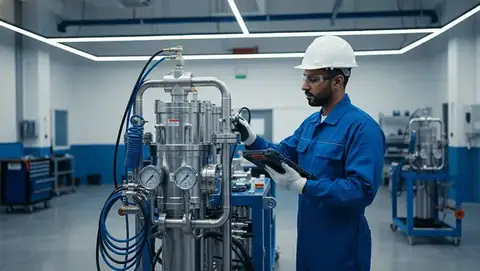
Hydraulic System Audit in Saudi Arabia – Improve Efficiency, Reliability & Equipment Performance
By the ETS engineering team · Dammam, Saudi Arabia

Comprehensive Hydraulic System Audits in Saudi Arabia: Boost Efficiency & Prevent Downtime
Hydraulic systems are essential for industrial operations across Saudi Arabia. From oil and gas facilities and manufacturing plants to construction equipment and marine operations, reliable hydraulic performance plays a critical role in maintaining productivity.
However, hydraulic systems can gradually lose efficiency due to component wear, fluid contamination, excessive operating temperatures, pressure losses, and inadequate maintenance.
These problems may remain unnoticed until they result in equipment failure, unexpected downtime, and expensive repairs.
A comprehensive hydraulic system audit helps industrial operators identify potential problems, evaluate equipment performance, and develop appropriate maintenance strategies.
This guide explains the importance of hydraulic system audits in Saudi Arabia, the inspection process, critical areas of assessment, and the potential benefits for industrial equipment reliability.
Key Takeaways
- Hydraulic system audits help identify performance issues before they develop into major equipment failures.
- Regular inspections support preventive maintenance and improved operational reliability.
- Hydraulic pressure, flow, temperature, and fluid condition are important performance indicators.
- Fluid contamination can accelerate wear in hydraulic pumps, valves, and cylinders.
- Equipment condition assessments help maintenance teams prioritize repairs.
- Saudi Arabia's high temperatures and dusty environments create additional maintenance challenges.
- Professional hydraulic inspections support informed decisions about repairs, replacement parts, and maintenance planning.
What is a Hydraulic System Audit?
A hydraulic system audit is a structured technical assessment of a hydraulic system's condition, operating performance, safety, and maintenance requirements.
Unlike a basic visual inspection, a comprehensive audit considers how individual hydraulic components interact within the complete system.
Depending on the equipment and agreed inspection scope, an audit may involve:
- Reviewing hydraulic circuit diagrams
- Inspecting hydraulic pumps and motors
- Evaluating hydraulic cylinders
- Checking hydraulic valves
- Inspecting hoses and fittings
- Measuring system pressure
- Assessing hydraulic flow
- Monitoring operating temperatures
- Reviewing hydraulic fluid condition
- Identifying possible contamination
- Evaluating safety-related components
- Reviewing maintenance records
The purpose is to identify potential faults, understand their causes, and recommend suitable corrective actions.
Why Hydraulic System Audits Are Important in Saudi Arabia
Industrial equipment in Saudi Arabia often operates under demanding environmental and operational conditions.
High ambient temperatures, airborne dust, sand, and extended operating schedules can affect hydraulic system reliability.
Hydraulic components are also exposed to mechanical loads, vibration, pressure fluctuations, and fluid-related deterioration.
Regular system assessments help identify developing problems and support maintenance planning.
Industries that may benefit from hydraulic system audits include:
- Oil and gas
- Petrochemical processing
- Manufacturing
- Construction and heavy equipment
- Marine and port operations
- Mining and quarrying
- Power generation
- Industrial machinery maintenance
Identifying the Hidden Costs of Hydraulic Inefficiency
Hydraulic inefficiency can increase operating costs even when equipment continues functioning.
Common problems include:
1. Internal Hydraulic Leakage
Internal leakage in pumps, valves, or cylinders may reduce hydraulic efficiency and affect equipment performance.
2. Excessive Pressure Losses
Flow restrictions and unnecessary pressure drops can increase energy consumption and reduce system efficiency.
3. High Operating Temperatures
Excessive heat can accelerate hydraulic fluid degradation and affect seals and other components.
4. Slow Equipment Operation
Reduced cylinder speed or inconsistent hydraulic movement can affect production cycles and equipment availability.
5. Premature Component Wear
Contamination, incorrect operating conditions, or unsuitable maintenance practices may contribute to repeated component failures.
Understanding these issues helps businesses evaluate the financial impact of hydraulic maintenance.
Proactive Maintenance vs. Reactive Repair
Reactive maintenance addresses equipment problems after a failure has occurred.
Although emergency repairs may be necessary, relying entirely on reactive maintenance can increase the risk of unexpected operational interruptions.
Proactive maintenance focuses on identifying potential problems before equipment failure.
A hydraulic system audit supports this approach by evaluating operating conditions and component health.
Potential advantages include:
- Earlier identification of equipment deterioration
- Improved maintenance scheduling
- Reduced risk of unexpected breakdowns
- Better spare parts planning
- Improved understanding of equipment condition
- More informed repair and replacement decisions
The Hydraulic System Audit Process: Step-By-Step
A structured audit generally involves three main phases.
Phase 1: Initial Consultation and System Review
The first stage involves understanding the equipment, operating conditions, and reported problems.
Information reviewed may include:
- Equipment make and model
- Hydraulic system diagrams
- Maintenance history
- Previous component failures
- Equipment operating hours
- Reported performance issues
- Hydraulic fluid specifications
- Manufacturer operating requirements
This information helps establish the inspection scope and identify areas requiring further investigation.
Phase 2: On-Site Data Collection and Inspection
The second phase focuses on examining hydraulic equipment and collecting relevant operating data.
The exact inspection activities depend on equipment accessibility, operating conditions, available instruments, and safety requirements.
Visual Inspection
Visual inspection helps identify:
- External hydraulic oil leakage
- Damaged hoses
- Loose fittings
- Corrosion
- Physical component damage
- Worn seals
- Abnormal component conditions
Thermal Inspection
Temperature measurements or thermal imaging, where available and appropriate, can help identify unusual heat patterns.
Potential concerns include:
- Overheating pumps
- Excessive valve temperature
- Hydraulic oil cooling problems
- Flow restrictions
- Abnormal heat generation
Hydraulic Fluid Sampling and Analysis
Hydraulic oil condition can provide valuable information about system health.
Depending on the scope, fluid analysis may assess:
- Particle contamination
- Water contamination
- Fluid viscosity
- Oxidation
- Wear particles
- General lubricant condition
Pressure and Flow Testing
Appropriate hydraulic instruments can help measure system operating conditions.
Measurements may include:
- Pump discharge pressure
- Hydraulic circuit pressure
- Flow rate
- Pressure losses
- Operating temperature
- Actuator performance
Measured results should be compared with relevant manufacturer specifications and expected operating conditions.
Phase 3: Analysis and Technical Reporting
After inspection and data collection, the findings are evaluated to identify potential causes of hydraulic performance problems.
A technical report may include:
- Equipment identification
- Inspection observations
- Recorded measurements
- Identified defects
- Potential causes
- Component condition
- Safety-related observations
- Recommended corrective actions
- Preventive maintenance suggestions
Findings can be prioritized according to severity, equipment criticality, and operational requirements.
Four Critical Areas of a Comprehensive Hydraulic System Audit
A comprehensive hydraulic assessment considers four major areas:
1. System Efficiency
2. Fluid Condition and Contamination
3. Safety
4. Component Health
1. Hydraulic System Efficiency and Performance
Hydraulic efficiency affects energy consumption, operating temperature, equipment response, and productivity.
Common performance problems include:
- Worn hydraulic pumps
- Internal leakage
- Incorrect pressure settings
- Restricted hydraulic flow
- Excessive pressure losses
- Inefficient cooling
- Reduced actuator performance
System Pressure Assessment
Hydraulic pressure should be evaluated according to the equipment manufacturer's operating specifications.
Incorrect pressure settings may reduce performance or create safety risks.
Hydraulic Flow Assessment
Hydraulic flow affects actuator speed and system operation.
Reduced flow may indicate pump wear, internal leakage, restrictions, or other component problems.
Hydraulic Temperature Assessment
High operating temperatures can affect hydraulic fluid properties and component reliability.
An audit may evaluate:
- Hydraulic oil temperature
- Cooling circuit condition
- Heat exchanger performance
- Oil cooler cleanliness
- Fluid viscosity suitability
2. Hydraulic Fluid Condition and Contamination Control
Hydraulic fluid plays an important role in transmitting power, lubricating components, and supporting system operation.
Contaminated hydraulic oil can contribute to premature wear and component damage.
Common Sources of Contamination
- Dust and airborne particles
- Water ingress
- Metal wear particles
- Damaged seals
- Improper maintenance practices
- Contaminated replacement fluid
- Deteriorated components
Effects of Contamination
Contamination may affect:
- Hydraulic pumps
- Control valves
- Hydraulic cylinders
- Hydraulic motors
- Seals
- Precision hydraulic components
Hydraulic Oil Analysis
Oil analysis can help identify contamination and lubricant deterioration.
ISO 4406 is commonly used to express particulate contamination levels in hydraulic fluids.
Acceptable cleanliness targets depend on the equipment and component manufacturer's requirements.
Filtration System Inspection
An audit may include inspection of:
- Hydraulic filters
- Filter housings
- Reservoir breathers
- Sealing arrangements
- Contamination indicators
- Filter maintenance records
Appropriate filtration and maintenance help reduce contamination-related problems.
3. Hydraulic System Safety Assessment
Hydraulic systems can operate at high pressures and present serious safety hazards.
A safety assessment helps identify visible defects and operating conditions that may require corrective action.
Hydraulic Hoses and Fittings
Inspection may identify:
- Hose abrasion
- Cracked hose covers
- Damaged fittings
- Incorrect routing
- Excessive bending
- External leakage
- Unsuitable hose assemblies
High-pressure hydraulic fluid injection can cause serious injury.
Never attempt to locate a pressurized hydraulic leak using bare hands.
Pressure Relief Valves
Pressure relief valves help protect hydraulic systems against excessive pressure when correctly specified, installed, and maintained.
Inspection or testing may be required to verify settings against applicable equipment specifications.
Hydraulic Accumulators
Hydraulic accumulators require appropriate handling and maintenance procedures.
Depending on the equipment and inspection scope, assessment may include checking condition, documentation, and nitrogen pre-charge using approved procedures.
Accumulator servicing should only be performed by suitably qualified personnel.
Operating Pressure and Temperature Limits
Hydraulic equipment should operate within the limits specified by the manufacturer.
Operating outside these limits may create component reliability and safety concerns.
4. Hydraulic Component Health and Integrity
The condition of individual components directly influences overall hydraulic system performance.
Hydraulic Pumps
Potential inspection areas include:
- Abnormal noise
- External leakage
- Operating pressure
- Flow performance
- Excessive temperature
- Signs of wear
Hydraulic Cylinders
Potential inspection areas include:
- Rod seal leakage
- Piston rod condition
- Chrome surface damage
- Cylinder barrel condition
- Internal leakage
- Abnormal movement
Hydraulic Control Valves
Potential inspection areas include:
- External leakage
- Internal leakage symptoms
- Valve response
- Pressure settings
- Operating condition
Hydraulic Hoses and Fittings
Potential inspection areas include:
- Hose condition
- Fitting compatibility
- Pressure rating
- Installation condition
- Mechanical damage
- Leakage
Early identification of damaged components supports more effective maintenance planning.
The Benefits of Hydraulic System Audits
A hydraulic audit can provide useful information for improving equipment reliability and maintenance decisions.
Reduced Operating Costs
Identifying leaks, inefficient components, and unsuitable operating conditions may help reduce avoidable expenses.
Potential cost areas include:
- Energy consumption
- Hydraulic fluid replacement
- Emergency repairs
- Spare parts expenditure
- Equipment downtime
Actual financial benefits depend on the equipment and corrective actions implemented.
Improved Equipment Availability
Condition assessment can help maintenance teams identify potential problems before they result in unexpected failures.
Planned repairs may reduce operational disruption compared with emergency breakdown maintenance.
Better Preventive Maintenance
Inspection findings help businesses develop maintenance schedules based on actual equipment condition.
This can support more effective use of maintenance resources.
Extended Component Service Life
Correct hydraulic fluid management, appropriate operating conditions, and timely component servicing can help reduce premature wear.
Improved Workplace Safety
Identifying damaged hoses, leaking components, unsuitable pressure settings, and other hazards supports safer maintenance planning.
Support for Maintenance Documentation
Technical inspection records provide useful information for:
- Maintenance planning
- Equipment history
- Repair prioritization
- Internal safety reviews
- Component replacement decisions
- Future troubleshooting
Hydraulic System Audits and Energy Efficiency
Hydraulic equipment can consume unnecessary energy when system components operate inefficiently.
Potential causes include:
- Internal pump leakage
- Excessive system pressure
- Incorrect valve settings
- Unnecessary flow restrictions
- Poor hydraulic circuit design
- Inadequate cooling
Appropriate performance measurements help determine whether corrective actions could improve energy efficiency.
Financial savings should be calculated using actual operating data rather than assumed percentages.
Hydraulic System Audits in Saudi Arabia's Industrial Environment
High Ambient Temperatures
High temperatures may increase hydraulic oil temperature and accelerate lubricant deterioration.
Regular monitoring helps identify overheating and cooling system problems.
Dust and Sand Exposure
Airborne contamination can enter hydraulic systems through damaged seals, open connections, or improper servicing procedures.
Suitable filtration and contamination control are important.
Demanding Equipment Duty Cycles
Industrial machinery may operate for extended periods under significant loads.
Routine condition monitoring helps identify deterioration associated with demanding operating conditions.
Hydraulic Audits for Different Industrial Sectors
Oil and Gas
Hydraulic systems are used in various industrial machinery and equipment applications.
Manufacturing
Hydraulic presses, production equipment, and automated machinery require reliable pressure and flow control.
Construction and Heavy Equipment
Excavators, wheel loaders, cranes, and other construction machinery depend on hydraulic systems for lifting, movement, and equipment operation.
Marine and Port Operations
Marine machinery, lifting equipment, and cargo-handling systems may require hydraulic inspection and maintenance.
Petrochemical and Process Industries
Industrial hydraulic equipment supports machinery operation and maintenance requirements in processing facilities.
How to Evaluate Hydraulic Audit Results
After completing a system assessment, maintenance teams should review the findings and prioritize corrective actions.
A practical evaluation may consider:
- Safety risk
- Equipment criticality
- Severity of the defect
- Probability of failure
- Operational impact
- Repair cost
- Spare parts availability
- Expected maintenance time
Critical safety concerns should be addressed according to applicable procedures before equipment continues operating.
Hydraulic System Audit Cost in Saudi Arabia
The cost of a hydraulic system audit depends on several factors.
These include:
- Equipment type
- Number of hydraulic systems
- System complexity
- Inspection scope
- Required testing
- Site location
- Equipment accessibility
- Reporting requirements
Customers should request a quotation based on their specific equipment and inspection requirements.
How Often Should a Hydraulic System Audit Be Performed?
There is no single inspection interval suitable for every hydraulic system.
The appropriate frequency depends on:
- Manufacturer recommendations
- Equipment criticality
- Operating hours
- Environmental conditions
- Previous failures
- Maintenance history
- Equipment age
High-duty-cycle or critical equipment may require more frequent condition assessments.
Why Choose ETS Arabia for Hydraulic Technical Support?
EMDAD TECHNICAL SERVICES COMPANY (ETS Arabia) provides hydraulic, mechanical, and industrial technical services in Saudi Arabia.
Based in Dammam, ETS supports industrial requirements in Riyadh and other locations across the Kingdom.
ETS service areas include:
- Hydraulic pump repair and maintenance
- Hydraulic cylinder repair and servicing
- Hydraulic hoses and fittings
- Hydraulic valves and control valves
- Hydraulic system troubleshooting
- Hydraulic power units
- Hydraulic seals and spare parts
- Hydraulic oil coolers
- Mechanical maintenance
- Industrial equipment servicing
- Machining and turnery work
- Fabrication and welding
- Industrial spare parts
For hydraulic system audit or inspection inquiries, customers can contact ETS Arabia to discuss equipment details, inspection requirements, and the available technical service scope.
Specific testing capabilities, inspection procedures, reporting arrangements, and service availability should be confirmed for each project.
From Hydraulic Inspection to Corrective Action
Identifying a hydraulic problem is only the first stage of improving equipment reliability.
Corrective actions may involve:
- Hydraulic hose replacement
- Hydraulic cylinder servicing
- Pump repair
- Valve maintenance
- Seal replacement
- Hydraulic fluid management
- Cooling system maintenance
- Component replacement
- Hydraulic system troubleshooting
The appropriate solution depends on the technical findings and equipment requirements.
Partner with ETS for Hydraulic System Reliability
Hydraulic system reliability is essential for maintaining industrial productivity.
A comprehensive hydraulic system audit helps operators understand equipment condition, identify potential failures, and plan appropriate maintenance activities.
By focusing on system efficiency, fluid condition, component health, and safety, businesses can make better decisions about hydraulic maintenance and equipment performance.
For hydraulic inspection, repair, maintenance, and industrial technical service requirements in Saudi Arabia, contact ETS Arabia.
Frequently Asked Questions
1. What is a Hydraulic System Audit?
A hydraulic system audit is a structured assessment of hydraulic equipment condition, operating performance, fluid quality, component integrity, and safety-related requirements.
It helps identify potential problems and supports maintenance planning.
2. How Long Does a Hydraulic System Audit Take?
The duration depends on equipment complexity, inspection scope, required measurements, site conditions, and the number of systems.
An estimated schedule should be confirmed after reviewing the equipment requirements.
3. Will a Hydraulic Audit Interrupt Production?
Some visual inspections and condition-monitoring activities may be possible during normal equipment operation.
Other procedures may require shutdown, isolation, and depressurization.
All inspection activities should follow appropriate safety procedures and be coordinated with the equipment operator.
4. What is the Cost of a Hydraulic System Audit in Saudi Arabia?
Costs vary according to equipment type, system complexity, inspection requirements, and site location.
A project-specific quotation is recommended.
5. What Are the Main Signs of Hydraulic System Problems?
Common symptoms include:
- Reduced hydraulic pressure
- Slow cylinder movement
- Excessive temperature
- Unusual pump noise
- Hydraulic oil leakage
- Abnormal vibration
- Repeated component failures
These symptoms should be investigated to determine the underlying cause.
6. Why is Hydraulic Oil Analysis Important?
Oil analysis can help identify contamination, fluid deterioration, and certain wear-related indicators.
The results support hydraulic maintenance and contamination-control decisions.
7. Can a Hydraulic System Audit Reduce Energy Consumption?
An audit may identify inefficiencies such as internal leakage, excessive pressure, or flow restrictions.
Correcting these issues can potentially improve energy performance.
Actual savings depend on the equipment and verified operating data.
8. Which Industries Benefit from Hydraulic Audits?
Hydraulic audits can benefit oil and gas, manufacturing, construction, marine operations, mining, power generation, and other industries using hydraulic equipment.
9. Does ETS Arabia Provide Hydraulic Repair Services?
ETS Arabia supports customers with hydraulic pump repairs, cylinder servicing, hoses and fittings, hydraulic valves, troubleshooting, and related industrial technical services.
Specific service availability should be confirmed with ETS.
10. How Can I Contact ETS Arabia?
Customers can contact ETS Arabia using the information below to discuss hydraulic equipment inspection and maintenance requirements.