Heavy Equipment Hydraulic Repair in KSA: A Guide to Minimizing Downtime
By the ETS engineering team · Dammam, Saudi Arabia
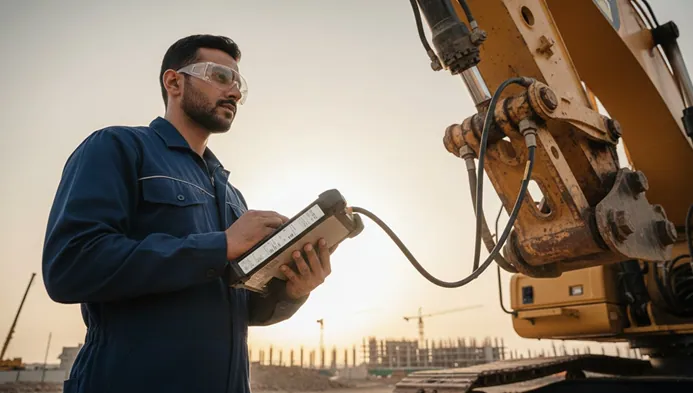
Table of Contents
Key Takeaways
Why Hydraulic Systems are Critical for Heavy Equipment in KSA
Diagnosing Hydraulic Problems in Your Heavy Equipment: Common Symptoms
The Heavy Equipment Hydraulic Repair Process: What to Expect
How to Choose the Right Hydraulic Repair Partner in Saudi Arabia
Preventative Maintenance: Avoiding Costly Hydraulic Failures
Your Partner in Maximizing Uptime and Performance in Saudi Arabia
Frequently Asked Questions
Introduction
The sudden silence of a failed hydraulic system on a busy worksite is a sound no project manager wants to hear. Each moment your excavator, crane, or loader remains idle translates directly into lost revenue and threatens critical project deadlines. Finding a reliable solution is paramount, but the search for technicians with specialized knowledge can be a significant challenge. This is where expert heavy equipment hydraulic repair services become essential, not just for a quick fix, but for a durable solution that helps prevent future failures.
This guide provides the information you need to take control of the situation. You will learn how to identify the early warning signs of hydraulic failure, understand the key differences between on-site and workshop repairs, and find a local partner with the expertise to get your machinery back to work. Our goal is to equip you with the knowledge to minimize costly downtime and secure a quality repair.
Key Takeaways
- Quickly identify critical hydraulic failure symptoms like slow operation, unusual noises, and fluid leaks to prevent catastrophic equipment damage.
- Learn the essential criteria for selecting a reliable partner for heavy equipment hydraulic repair in KSA, including responsiveness and quality to minimize operational losses.
- Understand the key differences between on-site field repairs for immediate fixes and in-depth workshop overhauls for complete system restoration.
- Adopt proactive maintenance strategies to protect your investment, significantly reducing the risk of sudden hydraulic failures and costly emergency repairs.
Why Hydraulic Systems are Critical for Heavy Equipment in KSA
In the demanding industrial, construction, and oil and gas sectors of Saudi Arabia, heavy equipment is the engine of progress. At the heart of this machinery lies the hydraulic system—a sophisticated network that converts fluid pressure into immense mechanical force. This technology is what allows a single operator to lift tonnes of material, dig through solid ground, and control massive machinery with precision. When these systems falter, the financial impact is immediate and severe, leading to costly downtime, project delays, and significant repair bills. Therefore, securing reliable heavy equipment hydraulic repair in KSA is not just a maintenance task; it is a critical business continuity strategy.
The Role of Hydraulics in Heavy Machinery
Hydraulic systems are the indispensable muscle behind the brute force of heavy equipment: • Lifting and Digging: The powerful movement of excavator booms, crane arms, and loader buckets is a direct result of hydraulic cylinders converting fluid pressure into linear force.
- Steering and Braking: In colossal machines like bulldozers and dump trucks, hydraulics provide the necessary force for responsive steering and reliable braking, ensuring both operational control and operator safety.
- Powering Attachments: Specialized tools such as hydraulic hammers, drills, and shears rely entirely on the hydraulic system of the host machine to deliver the focused power needed for demolition, quarrying, and recycling.
Common Causes of Hydraulic Failure in the KSA Climate
The operational environment in Saudi Arabia presents unique and severe challenges that accelerate wear on hydraulic components: • Contamination: Fine desert sand and dust are the primary enemies of hydraulic systems. Ingress of these abrasive particles can score cylinders, clog filters, and cause catastrophic pump and valve failure.
- High Temperatures: The Kingdom's extreme ambient heat can cause hydraulic fluid to degrade rapidly, losing its viscosity and lubricating properties. This leads to overheating and premature component wear.
- Hose & Seal Failure: Intense UV radiation and constant high temperatures cause rubber hoses and seals to perish, becoming brittle and prone to cracking. This results in dangerous fluid leaks and pressure loss.
- Operator Error: Pushing equipment beyond its specified limits or improper operation can place immense strain on the hydraulic system, leading to premature failure and costly repairs.
Diagnosing Hydraulic Problems in Your Heavy Equipment: Common Symptoms
In Saudi Arabia's demanding industrial and construction sectors, operational downtime is not an option. If your operator reports any of the following symptoms, cease operations immediately and conduct a safe preliminary inspection.
Safe Preliminary On-Site Checks
Power Down: Ensure the equipment is turned off and fully secured against any movement.
Check Fluid: Verify the hydraulic fluid is at the recommended level in the reservoir.
Visual Inspection: Look for obvious fluid leaks around hoses, fittings, and cylinders.
Note Observations: Document any strange noises or smells present just before shutdown.
1. Performance-Based Symptoms
- Slow or Sluggish Operation: Hydraulic functions, like lifting a boom or rotating a turret, take noticeably longer than usual, indicating a loss of flow from a worn pump or internal leaks.
- Loss of Power: The equipment struggles or is completely unable to lift loads it could previously handle with ease, pointing to significant loss of system pressure.
- Jerky or Erratic Movements: Lack of smooth, precise control caused by air in the system or failing control valves, creating a serious safety hazard.
2. Sensory-Based Symptoms (Noise & Leaks)
- Unusual Noises: High-pitched whining signals pump cavitation (fluid starvation), while banging or knocking indicates aeration or failing mechanical parts.
- Visible Fluid Leaks: Puddles under the machine or wetness around hoses, seals, and fittings indicate compromised integrity and introduce contamination risks.
- Milky or Foamy Hydraulic Fluid: Milky fluid indicates water contamination, while foamy oil indicates air entrainment, destroying lubricating film properties.
3. Temperature-Based Symptoms
- Overheating System: Abnormally high fluid temperatures indicate excessive friction, internal bypass leakage, or an overworked pump.
- Burnt Smell: A distinct burnt odor is a definitive sign that hydraulic oil has degraded from extreme heat and lost its protective additives.
Summary Overview: Symptoms, Causes & On-Site Protocols
- Immediate Protocol: Cease machine operation immediately upon noticing performance loss, leaks, or abnormal whining noises to prevent catastrophic structural or pump seizure.
- Environmental Aggressors: Ambient heat exceeding normal limits, airborne fine silica sand, and extreme solar UV break down mineral oils and degrade elastomeric seals.
- Cost of Inactivity: Catastrophic failure halts productivity, causing project delays and secondary damage.
The Heavy Equipment Hydraulic Repair Process: What to Expect
At Emdad Technical Services, our approach aims for efficiency whether the work is done in the field or as a complete workshop overhaul:
Step 1: On-Site Inspection and Diagnostics
Our service begins with safety isolation followed by diagnostic testing using pressure gauges, flow meters, and thermal imagers to isolate root causes without guesswork.
Step 2: Component Repair or Replacement
Contact our team to discuss whether minor faults can be handled on-site. Complex overhauls (pumps, motors, cylinders) are carried out at our Dammam workshop for teardown, precision machining, cylinder barrel honing, and rebuild using OEM-grade replacement parts.
Step 3: System Reassembly, Testing, and Commissioning
Following reassembly, our team executes a comprehensive system flush, installs fresh fluid to OEM specifications, and performs functional load testing under operational pressures to verify flow and cycle times.
How to Choose the Right Hydraulic Repair Partner in Saudi Arabia
Evaluate prospective service providers using four essential criteria:
- Criterion 1: Specialized Expertise and Experience: Ensure direct hands-on experience with leading heavy equipment manufacturers (Caterpillar, Komatsu, Volvo, Hitachi, JCB, Liebherr) across oilfield, mining, and construction environments.
- Criterion 2: Workshop Capabilities and Parts Availability: Verify the existence of in-house machining, rod chroming, cylinder honing, and dynamic test benches, alongside deep local spare parts inventory.
- Criterion 3: Responsiveness and On-Site Support: Look for emergency field availability and fully equipped mobile workshops that reach job sites with minimal mobilization delay.
- Criterion 4: Quality Assurance and Warranty: Demand comprehensive written warranties on all installed parts and labor to guarantee long-term performance.
Preventative Maintenance: Avoiding Costly Hydraulic Failures
A catastrophic pump failure can be very costly in repairs alone, excluding secondary downtime losses. Shifting to proactive maintenance reduces these operational hazards.
Daily Operator Walk-Around
- Inspect hoses, couplings, and cylinders for drips or weeping seals. • Verify fluid level and check clarity for milky or burnt appearances. • Listen for pump whining or cavitation during cold startup and cycling.
Scheduled Service Intervals
Execute timely hydraulic fluid and filter changes, schedule regular lab fluid analysis, and inspect flexible hoses for bulges, cracking, or outer jacket abrasion.
The ETS Partnership Advantage
ETS can discuss preventative maintenance support with you. Early detection of underlying component wear allows part replacements to be planned during scheduled maintenance windows, helping maximize machine uptime and asset resale value.
Your Partner in Maximizing Uptime and Performance in Saudi Arabia
Emdad Technical Services (ETS) offers hydraulic repair and supply from our Dammam workshop to help protect your heavy machinery against costly downtime. Contact our team to discuss your requirement.
Request a repair quote to minimize your downtime today at etsarabia.com .
Frequently Asked Questions (FAQs)
Do you service specific heavy equipment brands like Caterpillar, Volvo, or Komatsu?
We repair hydraulic components from equipment of a range of major heavy machinery manufacturers. Contact our team with your machine make and model to confirm what we can service.
Is it better to repair a hydraulic cylinder or replace it entirely?
Repair is typically faster and more economical for seal leaks, scratches, or gland issues. Replacement is recommended when barrels suffer severe deep gouging, rods are bent beyond tolerance, or catastrophic structural failure has occurred.