Hydraulic System Upgrade Services: Modernizing Industrial Performance in 2026
By the ETS engineering team · Dammam, Saudi Arabia
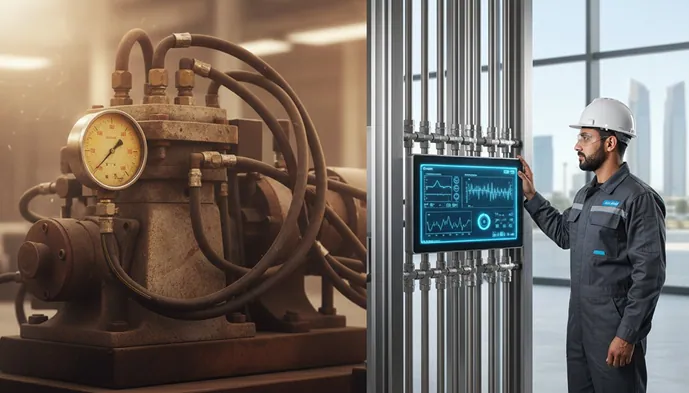
Table of Contents
Key Takeaways
What are Hydraulic System Upgrade Services?
Key Technologies Driving Hydraulic System Upgrades
Repair vs. Upgrade: Calculating Your ROI
Planning Your Hydraulic Upgrade in Saudi Arabia
Partnering with ETS for Comprehensive Hydraulic Modernization
Secure Your Competitive Edge for 2026 and Beyond
Frequently Asked Questions About Hydraulic System Upgrades
Introduction
In Saudi Arabia's demanding industrial climate, a significant share of a plant's energy can be lost to inefficient, overheating hydraulic systems. It's a constant battle against rising operational costs and the persistent threat of unpredictable downtime from aging machinery, especially when sourcing obsolete parts feels impossible. The frustration of seeing profits literally dissipate as heat is a familiar reality for many operations managers.
This guide provides a clear roadmap to reclaim that lost performance. We'll demonstrate how strategic hydraulic system upgrade services can transform these legacy assets into models of modern efficiency and extend their operational lifespan. You will learn how to reduce energy consumption, integrate modern IoT monitoring for predictive maintenance, and ensure your equipment is a reliable contributor to your bottom line. Discover the key modernization strategies, from intelligent component retrofitting to complete system redesigns, that support your 2026 operational goals.
Key Takeaways
- Understand how strategic modernization goes beyond simple repairs to fundamentally improve your system's pressure, flow, and control precision.
- Explore how integrating technologies like Variable Frequency Drives (VFDs) and smart sensors can significantly reduce energy consumption and enable predictive maintenance.
- Calculate the real cost of the "Repair Loop"—including labor, parts, and lost production in SAR—to see why professional hydraulic system upgrade services deliver a superior long-term ROI.
- Learn how to plan a successful upgrade in Saudi Arabia by accounting for critical local factors like extreme heat, sand, and specific industrial safety regulations.
What are Hydraulic System Upgrade Services?
Routine maintenance fixes problems as they occur, but it doesn't fundamentally improve your machinery's capability. Repair restores function; modernization elevates it. A hydraulic upgrade is a strategic overhaul that integrates modern components into existing frameworks to boost performance, efficiency, and reliability. This process goes beyond simple part replacement. It involves a comprehensive re-evaluation of your entire system's design and purpose. The core objective is to achieve quantifiable gains in system pressure, flow, and control precision, transforming aging assets into competitive advantages. True hydraulic machinery isn't just about power; it's about the precise application of that power, and an upgrade ensures every drop of fluid delivers maximum value.
For many industrial operators in Saudi Arabia, 2026 represents a critical tipping point. Systems installed during the industrial expansion of the early 2010s are now reaching the end of their optimal service life. Continuing with legacy components past this point doesn't just risk failure; it means falling behind on the efficiency and automation goals central to Saudi Vision 2030. As key component series from major manufacturers are phased out, waiting for a breakdown is no longer a viable strategy. Proactive hydraulic system upgrade services are essential to prevent costly emergency downtime in lost production.
The Anatomy of a Modernization Project
A successful upgrade is a multi-faceted project engineered for specific outcomes. It typically involves replacing legacy pumps, valves, and cylinders with high-efficiency models that can reduce energy consumption. We also analyze and redesign circuit layouts, optimizing hose routing and manifold blocks to minimize pressure drops and reclaim wasted energy. The most transformative step is often control integration, moving from manual levers to modern proportional and digital controls. This leap allows for PLC integration, remote monitoring, and a level of precision that was previously unattainable.
Signs Your System is Ready for an Upgrade
- Persistent Overheating: Your system consistently operates above 80°C even after the heat exchangers and cooling circuits have been serviced or replaced. This points to fundamental inefficiencies creating excess heat.
- Slow Cycle Times & Lost Precision: You notice a greater than 15% drop in cycle speed or operators can no longer achieve the fine control needed for quality output. This is a direct sign of internal component wear and pressure loss.
- Component Obsolescence: Sourcing spare parts for older components, like specific series from brands such as Rexroth or Parker, has become a procurement challenge with extended lead times. This is a critical risk to your operational continuity.
Key Technologies Driving Hydraulic System Upgrades
- Variable Frequency Drives (VFDs): A standard hydraulic system runs its electric motor at constant full speed, consuming maximum power regardless of actual demand. Adding a VFD can significantly reduce power draw by matching motor RPM directly to flow demand.
- Smart Sensors & IoT Integration: Embedded pressure transducers, flow transmitters, thermistors, and oil particulate sensors help transition maintenance from reactive fixes to predictive alerts.
- High-Performance Seals & Fittings: Replacing standard nitrile with fluoroelastomers (Viton™/FKM) and specialized polyurethanes prevents seal embrittlement in ambient desert temperatures exceeding 50°C.
- Custom Engineered HPUs: Bespoke hydraulic power packs designed with optimized fluid reservoirs, integrated VFD controls, and high-efficiency manifolds specifically matched to production lines.
- Digitalization & Proportional Controls (Hydraulics 4.0): Replacing manual directional spools with proportional and servo valves linked to PLCs improves machine control precision.
- High-Efficiency Cooling & Synthetic Media: Brazed plate heat exchangers with improved thermal dissipation paired with synthetic fluids that can extend oil operating life.
Comparison: Reactive Repair vs. Strategic Upgrade
| Metric | Reactive Repair (The Old Way) PDF | Strategic Modernization (The Smart Investment) PDF |
| System Capability | Restores baseline to previous degraded state | Elevates pressure, flow accuracy, and automation |
| Energy Consumption | Unchanged; continues high power drain | Reduced via VFDs & efficient pumps |
| Asset Lifespan | Extends run-time marginally | Can extend operational lifespan significantly |
| Component Sourcing | Vulnerable to obsolete series & long lead times | Standardized on current OEM component series |
| Financial Impact | Repeated emergency labor and lost production | Lower repeat-failure costs and more predictable budgeting |
Repair vs. Upgrade: Calculating Your ROI
The decision between a reactive repair and a strategic upgrade is a critical financial crossroad for any industrial operation in Saudi Arabia. While a quick fix might seem like the most cost-effective immediate solution, it often traps businesses in a "Repair Loop"—a costly cycle of recurring failures, emergency call-outs, and escalating downtime.
Planning Your Hydraulic Upgrade in Saudi Arabia
A successful modernization in the Eastern Province must be engineered around regional operating demands:
- Extreme Thermal Environments: Ambient temperatures exceeding 48°C to 50°C combined with high coastal humidity accelerate fluid breakdown and reduce cooler efficiency. Upgraded systems require oversized heat exchangers and high-viscosity synthetic fluids.
- Abrasive Sand & Dust Ingress: Airborne silica rapidly destroys standard seals. Upgrades require 3-micron filtration and heavy rod scraper systems.
- Regulatory Compliance: All electrical, mechanical, and pressure vessel modifications must conform to SASO standards and meet HCIS directives for critical energy infrastructure.
- Site Assessments & Technical Audits: Engineering audits use infrared thermal surveys, ultrasonic leak detection, and digital flow analysis to pinpoint component bottlenecks before designing modifications.
Partnering with ETS for Comprehensive Hydraulic Modernization
Emdad Technical Services (ETS) provides modernization support to help reduce system downtime. Contact our team to discuss your requirement:
- Custom HPU Design & Fabrication: In-house fabrication of turnkey power packs tailored for heavy manufacturing, marine, and oilfield operations.
- End-to-End Lifecycle Execution: Dedicated services covering initial engineering audit, hydraulic schematic redesign, PLC integration, on-site commissioning, and ongoing preventive maintenance contracts.
Secure Your Competitive Edge for 2026 and Beyond
Industrial modernization is a key lever to meet the operational efficiency and sustainability benchmarks of Saudi Vision 2030. Retrofitting modern VFD controls, IoT monitoring, and high-efficiency hydraulics can deliver meaningful energy savings and reliability gains.
Request a comprehensive technical audit of your hydraulic machinery today at etsarabia.com.
Frequently Asked Questions (FAQs)
How much does a hydraulic system upgrade typically cost?
Cost depends on the scope, from basic component or manifold modernizations to complete automated power units with PLC and proportional controls, and is determined after an on-site audit.
How long does a typical hydraulic modernization project take?
The duration depends on the scope of the engineering, installation and commissioning work. Targeted upgrades, such as valve block replacements, can often be scheduled during planned plant turnarounds.
Can I upgrade my hydraulic system without replacing the entire machine?
Yes. Many modernization projects involve retrofitting new pumps, valves, and electronic control packages onto existing heavy mechanical frames, which can be considerably cheaper than buying a new machine.
What are the main benefits of upgrading to proportional valves?
Proportional valves deliver variable electronic speed and pressure control, improving machine cycle accuracy while reducing system throttling energy losses.
Is it possible to add IoT monitoring to an older hydraulic system?
Yes. Diagnostic sensor packages (pressure, temperature, fluid particle counters, vibration) can be retrofitted onto legacy reservoirs and lines, enabling predictive fault warnings that help prevent unexpected breakdowns.
How do I know if my hydraulic pump is obsolete and needs an upgrade?
Key indicators include a noticeable increase in motor power draw, parts delivery lead times that keep growing, persistent cavitation noise, and inability to reach operating pressure at high cycle speeds.
Does ETS provide on-site upgrade services in Dammam?
ETS can discuss on-site audits and upgrade support in Dammam and the Eastern Province. Contact our team to discuss your requirement.