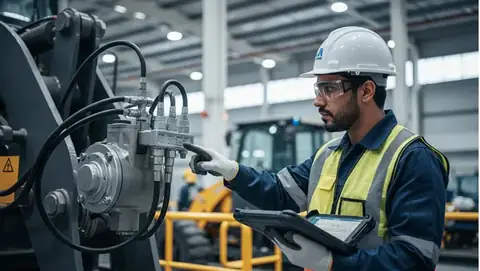
Hydraulic Pump Repair: A Comprehensive Guide to Minimizing Downtime
By the ETS engineering team · Dammam, Saudi Arabia
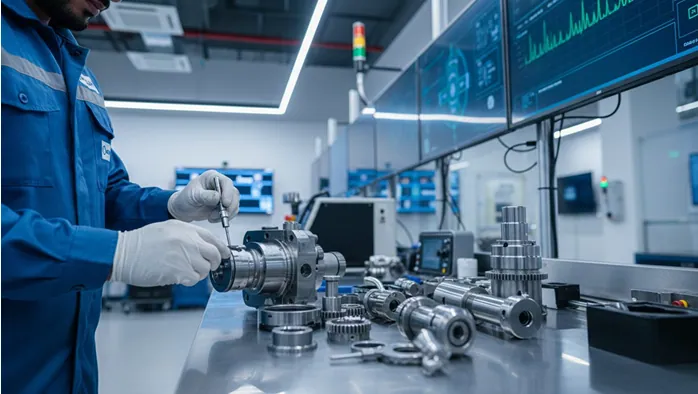
Table of Contents
Key Takeaways
Identifying the Problem: 5 Common Signs Your Hydraulic Pump Needs Repair
The Root Causes of Hydraulic Pump Failure (And How to Prevent Them)
The Professional Hydraulic Pump Repair Process: An Inside Look
Repair vs. Replace: Making the Right Financial Decision
Choosing a Reliable Hydraulic Repair Partner in Saudi Arabia
Your Partner for Minimized Downtime and Maximum Performance
Frequently Asked Questions About Hydraulic Pump Repair
Introduction
An unexpected hydraulic pump failure brings your entire operation to a grinding halt. Every minute of inactivity translates directly into lost revenue, and the uncertainty of the problem—its cause, its severity, and the best course of action—only adds to the pressure. For businesses across Saudi Arabia, securing a fast, reliable, and expert hydraulic pump repair is critical to restoring productivity. The challenge isn't just fixing the component; it's about minimizing costly interruptions and getting your equipment back online.
This comprehensive guide is your first step toward taking control of the situation. We will equip you with the knowledge to identify common hydraulic pump failures, understand the professional repair process from diagnosis to testing, and make an informed, cost-effective decision between repairing or replacing your unit. Our goal is to provide a clear roadmap that helps you find a trustworthy expert, reduce downtime, and ensure your systems are always in motion.
Key Takeaways
- Recognize early warning signs like unusual noises or slow performance to prevent minor issues from escalating into major operational shutdowns.
- Go beyond simple fixes by understanding the root causes of failure, such as fluid contamination, to implement effective preventative maintenance and maximize asset lifespan.
- Learn how to evaluate the total cost of ownership to make a strategic decision between a professional hydraulic pump repair and a full replacement, saving significant capital expenditure.
- Discover the key criteria for selecting a reliable repair partner in Saudi Arabia to ensure they have the diagnostic tools and expertise to minimize your downtime.
Identifying the Problem: 5 Common Signs Your Hydraulic Pump Needs Repair
In any industrial operation in Saudi Arabia, every minute of equipment downtime directly impacts your bottom line. Your hydraulic system is the powerhouse of your machinery, and its pump is the heart. Understanding the early warning signs of failure is crucial for preventing catastrophic breakdowns and costly interruptions. These symptoms are not minor inconveniences; they are clear indicators of developing problems that will lead to significant performance loss. Adopting a proactive inspection schedule over a reactive repair strategy is the key to maximizing productivity and ensuring operational reliability.
Symptom 1: Abnormal Noises
One of the most immediate signs of trouble is unusual noise. Healthy hydraulic pumps operate with a consistent, low hum. If you begin to hear high-pitched whining, knocking, or screeching sounds, it signals a serious internal issue. These noises are often caused by aeration (air in the fluid) or cavitation (vapor cavities collapsing within the fluid), both of which can rapidly erode and destroy critical internal components. Ignoring these sounds means allowing damage to continue, leading to a much more complex and expensive repair.
Symptom 2: Increased Operating Temperature
Excessive heat is a silent killer for hydraulic systems. While pumps generate some heat during normal operation, a noticeable increase in temperature is a major red flag. High heat breaks down hydraulic fluid, reducing its viscosity and lubricating properties. This can be caused by internal leaks, fluid contamination, or low fluid levels. Overheating accelerates wear on seals and metal parts, increasing the risk of component seizure and complete system failure. If the pump housing is too hot to touch, it requires immediate professional attention.
Symptom 3: Slow Performance and Loss of Power
A direct hit to your productivity is a clear sign your pump is failing. If you notice sluggish cylinder movement, slower cycle times, or a general loss of power and responsiveness, the pump is likely losing efficiency. This is typically due to internal leaks caused by wear and tear on components like vanes, pistons, or gears. The pump can no longer generate the required pressure to perform its job effectively, which means your equipment is not operating at its guaranteed capacity.
Symptom 4: Visible Fluid Leaks
While a minor drip might seem insignificant, any external fluid leak is a sign that a seal or component has failed. Leaks from shaft seals, fittings, or the pump housing itself indicate a breach in the system. Beyond the cost of replacing lost fluid, leaks create significant safety hazards (slip-and-fall risks) and environmental concerns, making prompt hydraulic pump repair essential for compliance and safety.
The Root Causes of Hydraulic Pump Failure (And How to Prevent Them)
Reacting to a hydraulic pump failure is a costly, disruptive process. A proactive approach, focused on understanding the root causes of failure, is the most effective strategy to ensure long-term operational reliability and minimize downtime.
Fluid Contamination: A Leading Cause of Failure
The vast majority of hydraulic system failures can be traced back to contaminated fluid. Microscopic particles of dirt, water, and metal act as an abrasive, eroding precision-machined internal components like pistons, vanes, and gears. This damage reduces efficiency, increases internal leakage, and ultimately leads to catastrophic failure.
- Prevention: Implement regular fluid analysis to detect contaminants before they cause severe damage. Ensure your system uses high-quality filtration, and always use clean, manufacturer-recommended hydraulic fluid during top-offs and changes. This simple discipline is the best defense against needing emergency hydraulic pump repair.
Aeration and Cavitation
Aeration (air bubbles in the fluid) and cavitation (vapor bubbles forming and collapsing) are silent killers of hydraulic pumps. Both phenomena create destructive micro-explosions inside the pump housing. This process, known as implosion, pits and erodes internal metal surfaces, leading to a rapid decline in performance and loud, unusual operating noises.
- Prevention: Regularly inspect all intake lines, seals, and fittings for potential air leaks. It is also crucial to maintain the proper fluid level in the reservoir to prevent air from being drawn into the system.
Operational Errors and Over-Pressurization
Every hydraulic pump is engineered to operate within specific pressure and speed limits. Exceeding these specifications, even for short periods, places immense stress on bearings, shafts, and seals. This leads to excessive heat generation, which degrades fluid viscosity and accelerates component wear, drastically shortening the pump's service life and often necessitating a complete overhaul or replacement.
- Prevention: Ensure all equipment operators receive thorough training on system limitations. Regular system calibration by qualified technicians is essential to verify that pressure relief valves are correctly set and functioning, protecting the pump from damaging pressure spikes.
The Professional Hydraulic Pump Repair Process: An Inside Look
When a critical pump fails, attempting a quick fix can lead to greater damage and extended operational downtime. A professional hydraulic pump repair service follows a systematic, transparent process designed to restore your equipment to its original manufacturer (OEM) specifications:
- Step 1: Initial Inspection and Diagnosis: Upon arrival at our facility, every pump undergoes a thorough external inspection to identify obvious damage like cracked housings or sheared shafts. Our technicians consult with you to understand the specific failure symptoms and operating conditions. Where possible, an initial performance test is conducted on a dedicated test bench to establish a baseline and confirm the reported issues.
- Step 2: Complete Disassembly and Component Analysis: The pump is carefully disassembled in a clean, controlled environment to prevent contamination. Each internal component—from pistons and valve plates to seals and bearings—is meticulously cleaned, measured, and inspected for wear, scoring, fatigue, or heat damage. This allows our experts to pinpoint the exact root cause of the failure.
- Step 3: Quoting, Repair, and Reassembly: Once the analysis is complete, we provide a detailed quotation in Saudi Riyal (SAR) that clearly outlines all necessary parts and labor costs. With your approval, our technicians proceed with the repair, using quality replacement parts. The pump is then reassembled with precision, adhering to manufacturer-specified tolerances.
- Step 4: Rigorous Testing and Quality Assurance: The rebuilt pump is mounted on our hydraulic test stand, where it is tested under simulated operational loads. We check that its pressure, flow, and volumetric efficiency meet OEM specifications before release.
Repair vs. Replace: Making the Right Financial Decision
| Decision Factor | REPAIR | REPLACE |
| Financial Advantage | Often more cost-effective than buying a new unit. | High initial capital expenditure (100% of new unit cost). |
| Turnaround Time | Often faster than sourcing a new unit. | Subject to shipping and lead times that can run to weeks or months. |
| Asset Life & ROI | Extends asset lifecycle and maximizes initial machine investment. | Delivers a brand-new factory unit with full manufacturer warranty. |
| System Compatibility | Preserves existing pipework, mounts, and fittings without modification. | May require system reconfiguration or updated bracket adapters. |
| Best Used For | Minor to moderate component wear, active production units, and when OEM parts exist. | Catastrophic structural fracture, obsolete components, or extreme fatigue limits. |
Choosing a Reliable Hydraulic Repair Partner in Saudi Arabia
In Saudi Arabia's demanding industrial landscape, choosing the right repair partner directly impacts operational uptime and lifecycle costs:
- Technical Expertise and Equipment: Look for specialized hydraulic technicians with proven experience across major global pump brands like Bosch Rexroth, Parker Hannifin, Eaton, Vickers, Kawasaki, and Danfoss. Premier workshops must possess dedicated cleanrooms and calibrated dynamic test benches.
- Fast Turnaround Time and Communication: Sourcing repairs locally within Dammam and the Eastern Province minimizes transport delays and supports transparent communication with project updates.
- Quality of Parts and Warranty: Ensure the provider uses genuine OEM-standard replacement parts, heavy-duty bearings, and high-specification seals, backed by a comprehensive written warranty.
Your Partner for Minimized Downtime and Maximum Performance
Effective management of hydraulic infrastructure hinges on early symptom recognition and making informed repair-versus-replace decisions. Emdad Technical Services (ETS) operates a repair facility in Dammam with hydraulic test benches to help restore pumps to manufacturer specifications.
Contact our team to schedule a diagnostic pump inspection or discuss an overhaul at etsarabia.com.
Frequently Asked Questions About Hydraulic Pump Repair (FAQs)
How long does a typical hydraulic pump repair take?
Turnaround depends on component damage and parts availability. Complex overhauls requiring specialized parts receive a clear timeline following initial teardown.
What brands of hydraulic pumps do you service at ETS?
We service a wide spectrum of international pump manufacturers, including Bosch Rexroth, Parker Hannifin, Eaton, Vickers, Kawasaki, Danfoss, and Denison, as well as bespoke configurations.
Is it possible to perform hydraulic pump repairs on-site?
ETS can discuss on-site diagnostic support and minor adjustments. Comprehensive overhauls requiring precision machining, clean assembly, and test-bench load validation are carried out at our Dammam workshop.
What is the average cost of a hydraulic pump repair?
Costs vary by pump size and the extent of damage. A repair is usually more economical than purchasing a new replacement unit when the main components are sound. Contact our team for a quotation.