Directional Control Valve Repair: Restoring Industrial Hydraulic Performance
By the ETS engineering team · Dammam, Saudi Arabia
Directional Control Valve Repair: Restoring Industrial Hydraulic Performance
Company: Emdad Technical Services (ETS), Dammam, Saudi Arabia
Website: etsarabia.com
Key Takeaways
Identify critical symptoms like sticking spools and hidden internal leaks before they lead to total system failure.
Learn to perform a cost-benefit analysis to determine when restoration is more commercially viable than a full replacement.
Explore the precision directional control valve repair process that utilizes ultrasonic cleaning and digital documentation to restore OEM level performance.
Discover how expert valve maintenance optimizes actuator timing and system pressure to significantly reduce costly industrial downtime.
Introduction
When a single sticking spool brings a critical hydraulic line to a halt, every hour of unplanned stoppage costs the facility money, and waiting for a replacement part from an overseas supplier can take a long time. Professional directional control valve repair isn't just a temporary fix; it's a strategic option that can restore system pressure in less time than sourcing new hardware.
You already know that your operations depend on the precise timing of these components, and any hesitation in the circuit leads to a significant loss of efficiency. We're here to ensure that doesn't happen. This guide provides the expertise you need to identify internal leakage, troubleshoot solenoid failures, and execute professional repairs that rival the longevity of brand-new components. We will walk through the essential steps of disassembly, precision inspection, and high-pressure testing to ensure your hydraulic systems return to peak performance without the high cost of total replacement.
What is Directional Control Valve Repair and Why Does it Matter?
Directional control valve repair is the precise technical process of disassembling, cleaning, and restoring the internal components of a valve to ensure fluid flow paths function exactly as engineered. It's a specialized service that goes far beyond basic maintenance. These components act as the primary logic gates of a hydraulic circuit. They dictate the timing of actuators and maintain the critical system pressure required for heavy industrial loads. When a valve fails, the entire sequence of operation breaks down, leading to erratic machinery behavior or total system lockup.
Many operators attempt a "part swapping" approach when a machine halts. This rarely solves the underlying issue. Swapping a damaged valve without addressing the root cause, such as fluid contamination or pump cavitation, ensures the new part will fail just as quickly. A low-cost valve failure can trigger a disproportionate loss of production. Professional directional control valve repair focuses on identifying these systemic triggers to support long-term reliability and optimize your operational uptime.
Common Types of Valves We Service
Spool Valves: These are the standard industrial workhorse. We focus on the spool lands and bore surfaces where tolerances are tightest.
Poppet and Rotary Valves: These require specific seating checks. We ensure zero-leakage performance by restoring the metal-to-metal seals.
Solenoid vs. Manual Controls: Whether your system relies on automated electrical signals or manual lever action, we calibrate the actuation force to prevent sticking.
The Anatomy of a Failing Valve
The core of any valve is the relationship between the spool and the bore. In high-performance systems, these clearances are often as tight as 0.002 mm to 0.005 mm. When these micro-tolerances are compromised by heat or friction, internal bypass leakage occurs, which can reduce actuator speed by 20% or more. We also inspect the seals and O-rings, which are the first line of defense against external environmental contamination. Valve silting is the accumulation of fine particles that jam spool movement. If silting isn't addressed through professional directional control valve repair, the solenoid coils can burn out as they struggle to move a seized spool, leading to even more expensive electrical repairs.
Troubleshooting Directional Valve Issues: Sticking, Leaks, and Heat
Identifying the root cause of hydraulic failure requires a methodical approach. In high-demand industrial hubs like Dammam, where ambient temperatures often exceed 45°C, directional control valves face extreme thermal and mechanical stress. Fine desert dust, often measuring less than 5 microns, can bypass standard filtration and enter the hydraulic circuit. This leads to accelerated wear that compromises precision. Effective directional control valve repair begins with distinguishing between mechanical seizing and fluid-related bypass issues.
Problem #1: Spool Sticking and Mechanical Failure
Contamination is the leading cause of hydraulic system failures. When microscopic particles lodge between the spool and the valve body, the valve refuses to shift or becomes sluggish. Beyond grit, mechanical fatigue in centering springs or worn detent pins can prevent the spool from returning to its neutral position. You can verify solenoid health without a full teardown by checking the coil resistance with a multimeter. A reading outside the manufacturer's specified range indicates a burnt-out component that needs replacement.
Particulate Ingress: Dust and metal shavings create friction that overpowers the solenoid's magnetic force.
Spring Fatigue: Weakened springs fail to center the spool, leading to unintended machine movements.
Solenoid Burnout: Voltage fluctuations or blocked spools cause coils to overheat and fail.
Problem #2: Excessive Internal Leakage
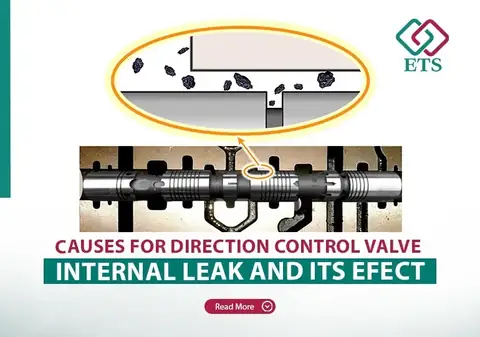
Internal leakage is often invisible but results in actuator drift, where a cylinder moves without a command. This happens when the clearance between the spool and bore exceeds the standard 0.005 mm to 0.015 mm tolerance range. In the Eastern Province's humidity and heat, hydraulic fluid loses viscosity, often falling below the 13 centistokes (cSt) minimum required for a proper seal. This thinning allows fluid to slip past the spool lands more easily. If your system's operating temperature spikes by 15°C above its baseline, it's a clear signal of internal bypass. For high-precision systems, expert diagnostic testing can quantify these leakage rates before they lead to total system shutdown.
Spool scoring is another culprit. It's usually caused by large contaminants or "lacquering," which is a varnish-like buildup from oxidized oil. Timely directional control valve repair prevents these minor bypass issues from evolving into expensive pump failures or catastrophic pressure loss. Maintaining fluid cleanliness at an ISO 4406 level of 18/16/13 or better is the most effective way to extend the life of these components in harsh Saudi Arabian environments.
The Repair vs. Replace Dilemma: Making the Commercial Choice
Deciding between a rebuild and a new purchase is a critical financial crossroads for any maintenance manager. It's not just about the price tag on the component; it's about the total cost of ownership and the speed of returning to full production. In many cases, a repair costs considerably less than a brand-new unit, which provides capital relief, especially when managing a fleet of hydraulic machinery.
A valve reaches the "beyond repair" threshold when the physical integrity of the casting is compromised. If our technicians detect structural cracks in the housing or severe bore scoring, the pressure integrity is lost. In these specific cases, even the most advanced honing won't restore the tight tolerances required for high-pressure systems. However, for many industrial failures, a professional rebuild is the superior commercial path.
Factors Favoring Professional Repair
Lead Time Advantages: Sourcing a new valve from international suppliers can involve a long wait. A local directional control valve repair in Dammam can often shorten this and reduce costly operational pauses.
Legacy Hardware Support: Many plants operate with reliable machinery from the 1990s. If the original manufacturer has discontinued the valve series, a precision repair is the only way to avoid a total system retrofit.
Sustainability Targets: Reclaiming a 50 kg steel valve body instead of scrapping it supports corporate green initiatives by reducing industrial waste and the carbon footprint associated with manufacturing new heavy components.
When Replacement is the Better Option
Standard, small-scale "disposable" valves, such as basic CETOP 3 models costing under $300, rarely justify the labor hours required for a rebuild. If a valve fails repeatedly every 4 to 6 months, the issue is likely a fundamental system design flaw or fluid contamination rather than simple wear. In these instances, we recommend replacing the unit and investigating the root cause. Furthermore, severe housing erosion caused by cavitation often makes the component unsafe for high-pressure service, necessitating an immediate replacement to ensure site safety.
ETS focuses on optimizing downtime by providing clear, data-backed recommendations. We don't guess; we measure. Our team evaluates the spool-to-bore clearance and seal surfaces to give you an honest assessment of whether a repair will deliver the 100% performance you expect. We ensure your systems stay in motion with reliable, expert solutions that respect your maintenance budget.
The ETS Professional Valve Repair Process
Restoring a hydraulic system requires more than just replacing seals. At Emdad Technical Services, our directional control valve repair protocol follows a rigorous, five-step methodology designed to eliminate the root causes of failure and extend component life. We prioritize precision because even a minor oversight leads to catastrophic system downtime. Our process is engineered to provide the reliability your operations demand.
Step 1: Precision Disassembly
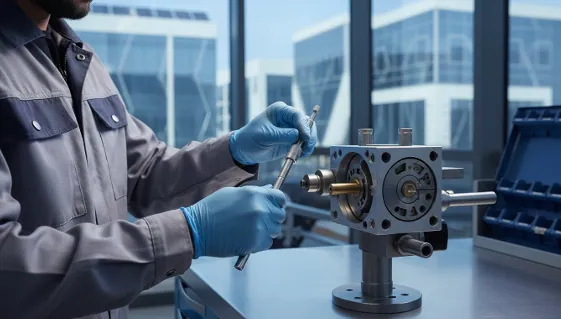
Technicians perform a complete teardown while documenting every internal component. This documentation helps ensure that complex multi-spool configurations are reassembled to match the original factory geometry.
Step 2: Ultrasonic Cleaning
We submerge components in industrial ultrasonic tanks. This process helps remove baked-on varnish and microscopic metallic silt that manual cleaning or solvent spraying may not reach.
Step 3: High-Precision Inspection
Our team uses calibrated micrometers and bore gauges to measure wear. We identify deviations as small as 0.0001 inches to determine if the valve body requires specialized honing or if the spool has lost its tolerance.
Step 4: Honing and Lapping
To restore optimal spool-to-bore tolerances, we utilize precision honing equipment. This step is critical for maintaining internal pressure seals and preventing fluid bypass that degrades system efficiency.
Step 5: Dynamic Bench Testing
Every valve undergoes a final validation on our test bench. We verify flow rates and pressure ratings against the original manufacturer specifications.
Contamination Control Protocols
Hydraulic systems are incredibly sensitive to debris. We take care to keep the work area clean during every directional control valve repair to prevent environmental pollutants from entering the assembly. Our flushing procedures use high-velocity fluid to purge the internal galleries. Even small particles can cause valve failure after repair by scoring the polished surfaces of the spool, so we use multi-stage filtration to reduce this risk.
Testing and Quality Assurance
Reliability is non-negotiable. Our quality assurance process involves simulating real-world operating conditions, including peak pressure spikes and rapid cycling. We perform pressure-drop testing to ensure the valve operates at maximum efficiency without internal leakage. Every client receives a detailed performance report that confirms response times and seal integrity. This transparent data gives you the confidence that your equipment is ready for high-stakes industrial use.
Why Choose ETS for Hydraulic Valve Services in Saudi Arabia?
Emdad Technical Services (ETS) operates from a workshop in Dammam, located near the Second Industrial City. We understand that every hour of halted production costs your business money. Our engineering team handles directional control valve repair for a range of industrial valve brands. Contact our team to discuss your requirement.
We focus on "Optimizing Downtime". Our technicians don't simply treat the symptoms; we analyze the entire hydraulic circuit to identify root causes like fluid contamination or pressure spikes. We provide the technical depth needed to ensure your systems remain reliable under heavy loads.
System Analysis: Root cause identification is a standard part of our process to prevent recurring valve failures.
Local Expertise, Global Standards
Our team of hydraulic technicians in Saudi Arabia works to high quality standards. We aim to use quality seals and replacement parts in every directional control valve repair. You can explore our full range of hydraulic repair services to learn more about our holistic approach to industrial maintenance.
Get Your Equipment Back in Motion
Scheduling a diagnostic is straightforward. Beyond valve services, we provide custom HPU fabrication and system upgrades to ensure your machinery stays ahead of modern performance demands. Don't let a faulty valve stall your operations. Contact Emdad Technical Services for Expert Valve Repair to secure a solution that keeps your systems in motion.
Optimize Your Hydraulic Performance Today
Maintaining peak hydraulic performance requires more than just reactive maintenance; it demands technical precision. Addressing issues like spool sticking or internal leaks early prevents the catastrophic failure of your high-pressure machinery. Choosing professional directional control valve repair instead of immediate replacement can often save industrial facilities component costs while reducing lead times.
At Emdad Technical Services (ETS), we work to restore your equipment to its original specifications. Our workshop is located near Dammam 2nd Industrial City. Don't let a faulty valve stall your production schedule or compromise your safety protocols. Our technicians specialize in optimizing downtime and restoring the reliable performance your industrial systems need to stay in motion.
Frequently Asked Questions (FAQs)
Q1: How long does a typical directional control valve repair take?
A: Repair time depends on the valve type, its condition and the parts required. The process includes initial inspection, component replacement, and pressure testing, and complex multi-spool valves take longer. Contact our team with your valve details for an estimate.
Q2: Can you repair valves from brands like Rexroth and Parker in Saudi Arabia?
A: We repair directional control valves from a range of industrial brands, including Rexroth, Parker, Vickers, and Eaton. Contact our team with the valve model to confirm what we can service in our Dammam workshop.
Q3: What are the most common signs that my hydraulic valve is failing?
A: You'll notice erratic actuator movement or a 15% drop in system pressure when a valve begins to fail. Excessive heat generation, where the valve body exceeds 65°C, often indicates internal bypass leakage. Listen for unusual buzzing sounds or "hunting" behavior in the spool. If you spot external oil weeping around the solenoids, it's time to schedule a professional directional control valve repair to prevent total system failure.
Q4: Is it cheaper to repair a directional control valve or buy a new one?
A: Repairing a valve is often considerably cheaper than buying a new replacement unit, and often faster than waiting for new imports. We recommend replacement if the housing is cracked or if the internal bore wear is beyond tolerance.