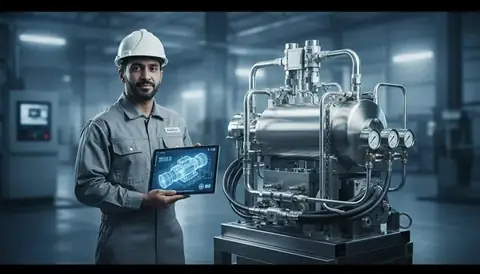
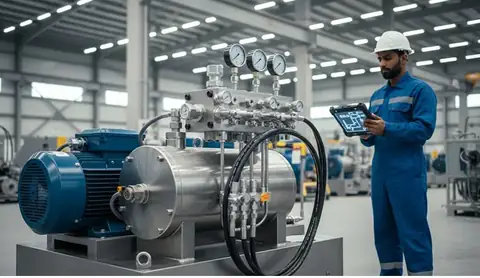
Custom Hydraulic Power Unit Design in Saudi Arabia: Components, Applications and Engineering Process
By the ETS engineering team · Dammam, Saudi Arabia
A Practical Guide to Custom Hydraulic Power Unit Design
Hydraulic Power Units (HPUs) are essential for powering hydraulic machinery used in manufacturing, construction, oil and gas, marine operations, and industrial facilities across Saudi Arabia.
While standard hydraulic power units are suitable for many general applications, specialized equipment may require a custom hydraulic power unit design to meet specific operating conditions, space limitations, pressure requirements, and control needs.
This practical guide explains the advantages of custom HPUs, the engineering process, essential components, industrial applications, and important considerations when selecting a hydraulic power solution.
Key Takeaways
- Custom hydraulic power units can be configured to meet specific pressure, flow, duty cycle, and installation requirements.
- Proper component selection is essential for system performance, reliability, and efficiency.
- Hydraulic pumps, motors, valves, reservoirs, and filtration systems are critical HPU components.
- Design reviews and technical specifications help ensure compatibility with existing equipment.
- Custom HPUs can support manufacturing, oil and gas, marine, mobile equipment, and infrastructure applications.
Why Choose a Custom HPU Over a Standard Off-The-Shelf Unit?
Standard hydraulic power units are designed for general operating requirements. However, specialized industrial applications may require configurations that are not available in standard models.
Custom hydraulic power unit design allows engineers to select components and system configurations according to the intended application.
Important advantages include improved equipment compatibility, optimized installation space, suitable control functions, and the potential for greater operating efficiency.
Performance and Precision
A hydraulic power unit must deliver the required pressure and fluid flow for its intended application.
Correct component sizing helps avoid problems associated with oversized or undersized equipment.
Important performance considerations include:
- Required operating pressure
- Hydraulic flow rate
- Equipment duty cycle
- Motor power requirements
- Hydraulic control accuracy
- Expected operating conditions
Proper system design helps maintain suitable performance while reducing unnecessary energy losses.
Space Optimization and Footprint
Industrial facilities and mobile equipment may have limited space for hydraulic power units.
A custom HPU can be configured around available installation dimensions.
Design considerations may include:
- Reservoir dimensions
- Component positioning
- Motor and pump arrangement
- Frame configuration
- Maintenance accessibility
- Hydraulic hose and piping connections
Compact system layouts can improve installation flexibility without compromising essential service access.
System Integration and Efficiency
Custom hydraulic power units may need to integrate with existing machinery, electrical systems, and control equipment.
Depending on the application, this may involve:
- Manual hydraulic controls
- Electrical control panels
- Pressure and temperature sensors
- Programmable Logic Controllers (PLCs)
- Automated operating sequences
- Equipment monitoring systems
Appropriate component selection and system integration help support efficient hydraulic operation.
The Custom Hydraulic Power Unit Design Process: from Concept to Commissioning
A structured engineering process is important when developing a hydraulic power unit for a specialized industrial application.
The process generally includes application analysis, hydraulic circuit design, component selection, design review, assembly, testing, and commissioning.
Step 1: Initial Consultation and Application Analysis
The first stage is understanding the customer's operating requirements.
Important information includes:
- Required hydraulic pressure in bar
- Required hydraulic flow in LPM
- Equipment application
- Operating duty cycle
- Available power supply
- Environmental conditions
- Available installation space
- Hydraulic control requirements
Accurate operating information helps determine the appropriate system configuration.
Step 2: Component Selection and Hydraulic Circuit Design
After identifying the operating requirements, suitable hydraulic components can be selected.
These may include:
- Hydraulic pumps
- Electric motors or diesel engines
- Directional control valves
- Pressure control valves
- Flow control valves
- Hydraulic manifolds
- Oil reservoirs
- Hydraulic filters
- Oil coolers
- Pressure gauges and sensors
Hydraulic circuit design should consider equipment functionality, operating efficiency, safety, and maintenance requirements.
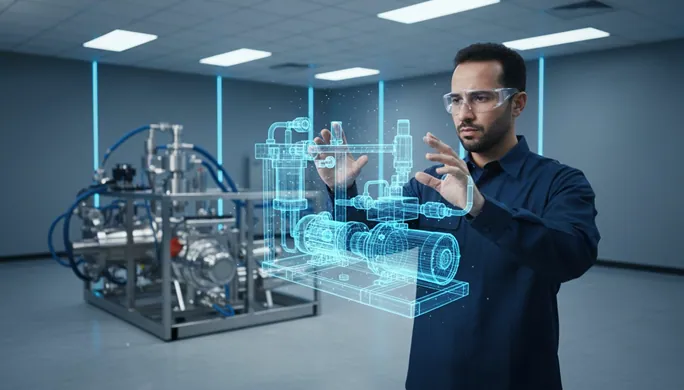
Step 3: 3d Modeling and Design Review
For applications requiring detailed engineering, 3D modeling and technical drawings can help evaluate the proposed HPU configuration.
Design reviews may include:
- Overall equipment dimensions
- Component arrangement
- Mounting and frame requirements
- Hydraulic connections
- Maintenance accessibility
- Electrical and control interfaces
Final design documentation may include hydraulic circuit diagrams, fabrication drawings, and a bill of materials.
The level of engineering documentation depends on the project requirements.
Step 4: Assembly and System Integration
Following design approval, the selected components are assembled according to the technical requirements.
Correct installation of pumps, motors, valves, hoses, fittings, and control components is essential.
Assembly procedures should follow applicable equipment specifications and safety requirements.
Step 5: Testing and Commissioning
Before a hydraulic power unit enters service, appropriate inspection and testing should be completed.
Depending on the application, testing may include:
- Hydraulic pressure verification
- Flow performance checks
- Leakage inspection
- Temperature monitoring
- Control function testing
- Electrical safety checks
- System operation verification
Testing requirements should be established according to the approved design and relevant equipment specifications.
Critical Components in a Custom Hydraulic Power Unit Design
A hydraulic power unit consists of several interconnected components that generate, regulate, and deliver hydraulic power.
Correct component selection is important for reliable operation.
1. the Prime Mover: Electric Motors and Engines
The prime mover provides mechanical energy to operate the hydraulic pump.
Common options include:
AC Electric Motors
Frequently used in stationary industrial equipment and manufacturing facilities.
DC Electric Motors
Used in selected mobile and compact hydraulic applications.
Diesel Engines
Suitable for certain remote or mobile applications where an electrical power supply may not be available.
Motor selection depends on power requirements, duty cycle, available energy supply, and operating conditions.
2. the Heart of the System: Hydraulic Pumps
Hydraulic pumps convert mechanical energy into hydraulic fluid flow.
Common pump types include:
Gear Pumps
Often used in relatively simple hydraulic applications requiring dependable fluid delivery.
Vane Pumps
Used in applications where operating characteristics such as noise and flow performance are important.
Piston Pumps
Suitable for various demanding hydraulic applications, including high-pressure systems.
Pump selection depends on required pressure, flow rate, efficiency, and operating conditions.
3. Control and Direction: Hydraulic Valves and Manifolds
Hydraulic valves regulate fluid movement and operating conditions.
Directional Control Valves
Control the direction of hydraulic fluid flow.
Pressure Control Valves
Help regulate or limit hydraulic pressure.
Flow Control Valves
Control fluid flow to manage actuator speed.
Hydraulic Manifolds
Combine multiple hydraulic connections and valve functions within a compact assembly.
Appropriate valve and manifold selection can simplify system layout and reduce external piping requirements.
4. the Foundation: Hydraulic Reservoirs
The hydraulic reservoir stores fluid and supports hydraulic system operation.
Reservoir design should consider:
- Fluid capacity
- Heat dissipation
- Contamination prevention
- Fluid level monitoring
- Maintenance accessibility
- Operating environment
Reservoir capacity must be determined according to the hydraulic system's actual requirements.
5. Hydraulic Filtration Systems
Hydraulic filtration helps protect pumps, valves, cylinders, and other components from contamination.
Common filtration components include:
- Pressure-line filters
- Return-line filters
- Suction strainers
- Reservoir breathers
- Offline filtration equipment
Filtration requirements depend on the equipment design and specified hydraulic fluid cleanliness level.
6. Hydraulic Oil Coolers
Hydraulic systems generate heat during operation.
Oil coolers may be required to maintain suitable fluid temperatures, especially in high-duty-cycle applications or demanding environmental conditions.
Cooling requirements depend on heat generation, ambient temperature, system efficiency, and operating duration.
APPLICATIONS: CUSTOM HPUs IN SAUDI ARABIA'S CORE INDUSTRIES
Custom hydraulic power units can support a wide range of industrial applications across Saudi Arabia.
Oil and Gas Operations
Hydraulic power units may be used in:
- Drilling equipment
- Wellhead control systems
- Pipeline equipment
- Industrial actuators
- Hydraulic tensioning systems
Equipment intended for hazardous areas may require specially selected and certified components appropriate to the relevant area classification.
Manufacturing and Industrial Plants
Hydraulic power units are widely used in manufacturing applications.
Examples include:
- Hydraulic presses
- Industrial machinery
- Material handling equipment
- Production line systems
- Machine tools
- Automated hydraulic equipment
Custom system configurations can help meet specific manufacturing and operational requirements.
Marine and Offshore Applications
Marine hydraulic equipment operates in demanding environments involving moisture, salt exposure, and limited installation space.
Applications may include:
- Marine winches
- Deck cranes
- Steering systems
- Offshore equipment
- Hydraulic lifting systems
Suitable materials, corrosion protection, and environmental considerations are important during system design.
Mobile Equipment
Custom HPUs can be used in selected mobile hydraulic applications.
Examples include:
- Construction equipment
- Hydraulic lifting machinery
- Mobile service equipment
- Specialized industrial vehicles
- Material handling systems
Compact configurations and suitable power sources are important considerations.
Infrastructure and Industrial Projects
Hydraulic power units can support infrastructure development, heavy lifting, and specialized industrial equipment.
The final configuration depends on the required hydraulic performance and operating environment.
Important Factors When Selecting a Custom Hydraulic Power Unit
Before selecting or specifying an HPU, businesses should evaluate:
1. Hydraulic pressure requirements
2. Required flow rate
3. Motor or engine power
4. Operating duty cycle
5. Reservoir capacity
6. Hydraulic control functions
7. Filtration requirements
8. Cooling requirements
9. Installation dimensions
10. Maintenance accessibility
11. Environmental conditions
12. Applicable safety requirements
Providing accurate technical specifications helps identify a suitable hydraulic power solution.
Custom Hydraulic Power Unit Cost Considerations
The cost of a custom hydraulic power unit depends on its technical specifications and configuration.
Important cost factors include:
- Hydraulic pump type
- Motor power
- Pressure and flow requirements
- Reservoir capacity
- Control valve configuration
- Electrical and automation systems
- Frame and fabrication requirements
- Filtration and cooling equipment
- Testing and installation requirements
Custom HPUs may require a higher initial investment than standard units.
However, an appropriately specified system may provide long-term value through improved application suitability and reduced unnecessary energy consumption.
Actual pricing must be determined from the approved technical specifications and project requirements.
Hydraulic Power Unit Maintenance
Regular maintenance is important for long-term HPU performance.
Recommended maintenance activities include:
- Checking hydraulic oil levels
- Inspecting hoses and fittings
- Monitoring operating pressure
- Checking fluid temperature
- Inspecting hydraulic filters
- Monitoring pump and motor operation
- Checking for abnormal vibration
- Inspecting hydraulic valves
- Monitoring fluid cleanliness
- Maintaining accurate service records
Maintenance schedules should follow manufacturer recommendations and actual operating conditions.
Your Partner for Hydraulic Power Solutions in Saudi Arabia
EMDAD TECHNICAL SERVICES COMPANY (ETS Arabia) supports hydraulic and industrial equipment requirements across Saudi Arabia.
Our hydraulic services and product areas include:
- Hydraulic power units
- Hydraulic pump repair and maintenance
- Hydraulic cylinder repair and servicing
- Hydraulic hoses and fittings
- Hydraulic control valves
- Hydraulic seals and spare parts
- Hydraulic oil coolers
- Industrial fabrication and machining
- Mechanical maintenance
- Technical support and installation
Customers requiring hydraulic power unit solutions can contact ETS Arabia to discuss equipment specifications, component requirements, and suitable technical support.
Project-specific design, fabrication, integration, and testing capabilities should be confirmed during technical consultation.
Frequently Asked Questions
1. What Information is Required to Start a Custom HPU Design?
Important information includes the required flow rate in LPM, operating pressure in bar, motor or engine requirements, reservoir capacity, duty cycle, available installation space, and environmental conditions.
Control requirements and equipment application details are also important.
2. How Long Does Custom HPU Design and Fabrication Take?
The timeline depends on design complexity, engineering requirements, component availability, fabrication scope, and testing procedures.
A project-specific schedule should be confirmed after reviewing the technical requirements.
3. Can a Custom HPU Integrate with an Existing Control System?
Custom hydraulic power units can be designed to integrate with compatible electrical and control systems.
Integration may involve PLCs, sensors, control panels, or other automation equipment.
Compatibility must be evaluated during the engineering process.
4. What is the Cost Difference Between a Custom and Standard HPU?
Custom HPUs may have higher initial costs because of specialized components, engineering requirements, and project-specific configurations.
The actual cost depends on pressure, flow, motor power, control complexity, and other technical requirements.
5. Can a Hydraulic Power Unit Be Repaired or Serviced?
Many hydraulic power unit components can be inspected, serviced, or repaired depending on their condition.
Common maintenance activities include pump servicing, valve troubleshooting, hose replacement, filter maintenance, and hydraulic system inspection.
6. What Are the Main Components of a Hydraulic Power Unit?
The main components generally include a hydraulic pump, prime mover, reservoir, control valves, filtration equipment, hydraulic connections, and associated monitoring devices.
Additional components depend on the application.
7. How Can I Contact ETS Arabia for Hydraulic Power Unit Requirements?
Contact EMDAD TECHNICAL SERVICES COMPANY with your equipment specifications and hydraulic system requirements.
Our team can assist with relevant hydraulic products, technical services, and project inquiries.